By James Heinz
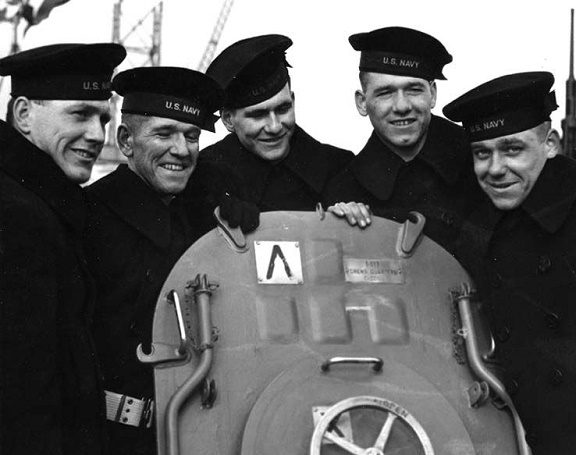
In 1942 five brothers from the Sullivan family of Waterloo, Iowa, enlisted in the U.S. Navy. They were George (age 27), Francis (age 26), Joseph (age 24), Madison (age 23), and Albert (age 20). They enlisted under the condition that they serve on the same ship, saying “We stick together.”
Photo at top of page: Joseph, Francis, Albert, Madison and George Sullivan
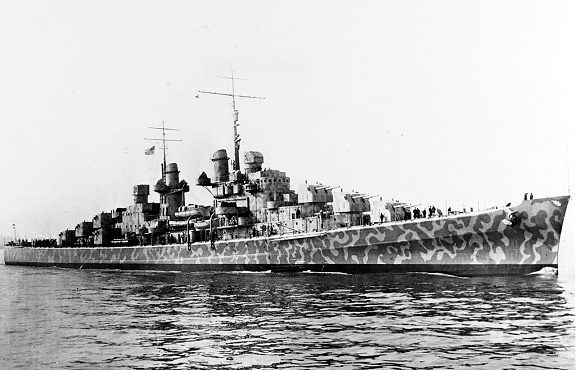
USS JUNEAU (CL-52)
All five were assigned to the light antiaircraft cruiser USS JUNEAU and were together on the night of November 12/13, 1942 when the JUNEAU and other ships fought the Naval Battle of Guadalcanal. It was a night surface engagement that one American officer described as “a bar room brawl with the lights shot out.” The US lost 4 destroyers, 2 cruisers, and 1,439 dead including two admirals. One of the cruisers was the JUNEAU and five of the dead were the Sullivan brothers.
During the battle, JUNEAU was hit by an enemy torpedo on the port side which broke her keel and knocked out her electrical power. She drifted helplessly until 11 am that morning when another Japanese torpedo hit JUNEAU. The ship simply disintegrated in an explosion so massive that other U.S. ships thought no one could have survived it and so left the scene.
However, about 100 men survived and were left drifting in the water until only 10 were left alive 8 days later. Francis, Joseph, and Madison went down with the ship. Albert drowned the next day. George survived 4 or 5 days on a raft but then climbed over the side and disappeared. The five brothers were the largest loss of life from one family in World War II.
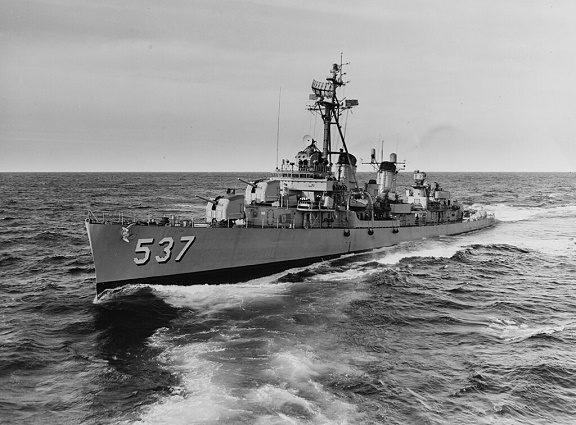
USS THE SULLIVANS (DD-537) underway at sea on October 29, 1962
The Navy would honor their sacrifice by launching the Fletcher class destroyer USS THE SULLIVANS DD-537 in 1943. She was christened by their mother and the ship’s motto was “We Stick Together.”
She was the first US warship named after more than one person. She displaced 2,050 tons, was 376 feet long, 39 feet wide, and drew 17 feet of water. Her twin steam turbines drove her twin props to 35 knots. She had a range of 7,500 miles and a crew of 336. She survived WW II, Korea, and a typhoon, possibly protected by the lucky shamrock painted on her funnel.
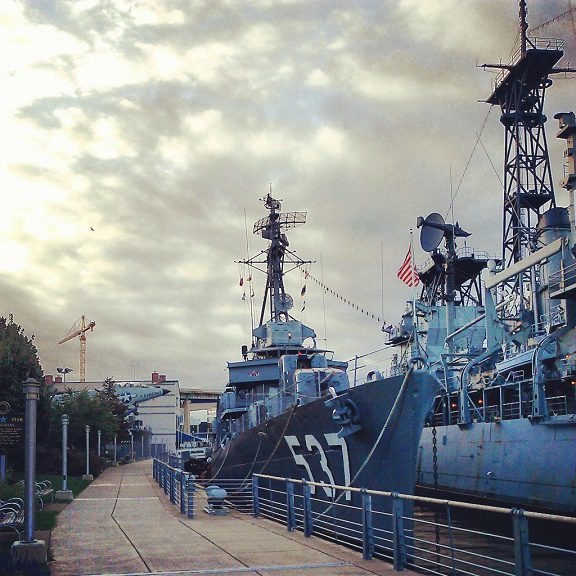
THE SULLIVANS at Buffalo, September 2013
THE SULLIVANS was decommissioned in 1965. In 1977 she was brought into the Great Lakes and was docked as a war memorial in the Buffalo and Erie County Naval and Military Park in Buffalo, New York. She was named a National Historic landmark in 1986 and is open for tours.
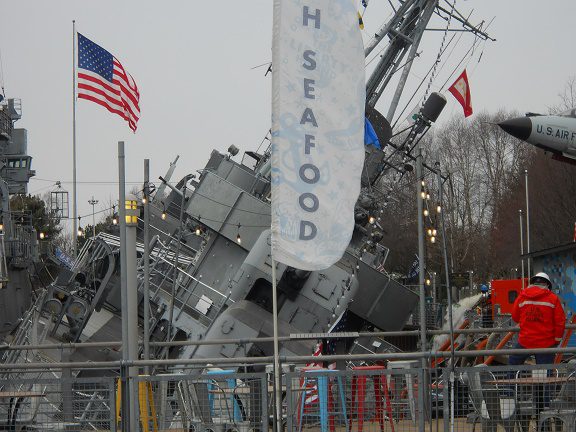
THE SULLIVANS (DD-537) listing in 2022
In February 2021 she almost became a Great Lakes shipwreck when she began listing due to damage below the waterline. In April 2022 she began listing again and partially sank. WMHS files show divers found and sealed 13 holes in her hull ranging in size from 0.75 inches to 2.5 inches. By May she had been pumped out and refloated. The damage was caused by age and Great Lakes weather. Even her lucky shamrock could not protect her from that.
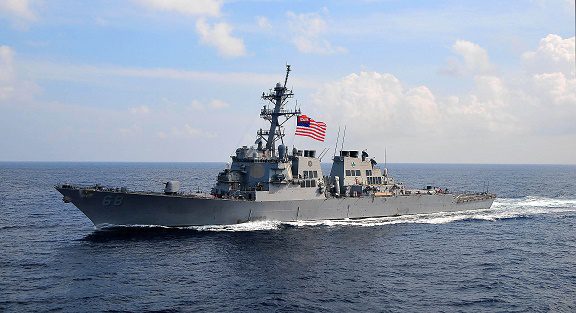
THE SULLIVANS (DDG-68) in 1995
The US Navy also launched a second USS THE SULLIVANS DDG-68 in 1995. It was christened by Albert’s granddaughter. She is still in service. Her motto is: We Stick Together.
So, on this day, remember the service and sacrifice of the Sullivan brothers and the now Great Lakes ship named for them.
James Heinz is the Wisconsin Marine Historical Society’s acquisitions director. He became interested in maritime history as a kid watching Jacques Cousteau’s adventures on TV. He was a Great Lakes wreck diver until three episodes of the bends forced him to retire from diving. He was a University of Wisconsin – Milwaukee police officer for thirty years. He regularly flies either a Cessna 152 or 172.
Photos courtesy of Wikipedia
Note of interest from Bruce Nason: Mr. & Mrs. Sullivan toured the country for War Bonds and in 1944 a film, “The Sullivans” was released. Mrs. Sullivan also served in USO Canteens.
