By James Heinz
The World War II German U-boat U-505 was brought to Chicago in 1954 after its capture on the high seas in 1944. But before it could be captured, it had to be saved from the sinking condition in which its German crew had left it.
That man who saved the U-505 was Lt. Albert Leroy David.
David was born in 1902 in Marysville, Missouri. He joined the U.S. Navy in 1919 and served for 20 years. One of the ships he served on was the USS UTAH, which still lies at the bottom of Pearl Harbor. He left the Navy after 20 years in August 1939, only to be recalled to duty a month later.
In 1942, he was promoted to ensign and assigned to diesel engine training at the University of Wisconsin-Madison. He then joined the crew of DE-133 USS PILLSBURY. Although built in Texas, PILLSBURY, which was named for an admiral and not a brand of bread dough, was a destroyer escort of the type I described being built at the Defoe Shipyard in Michigan during World War II. https://wmhs.org/ships-that-were-built-upside-down/ Promoted to Lieutenant (junior grade), David was made assistant engineering officer of the PILLSBURY.
On June 4, 1944, TF 21.12 detected the U-505 and depth charged her, damaging her so severely that her captain surfaced and ordered his crew to abandon ship, which they did, leaving the engines running, which caused the submarine to continuously circle while sinking.
The Task Force commander, Chicago native Capt. Daniel Gallery, had told his crew he wanted to “bring one back alive.” He sent a boarding party commanded by David to try to save the U-505 and recover its secrets. David’s Medal of Honor citation describes what happened next:
“For conspicuous gallantry and intrepidity at the risk of his life above and beyond the call of duty while attached to the U.S.S. Pillsbury during the capture of an enemy German submarine off French West Africa, 4 June 1944. Taking a vigorous part in the skillfully coordinated attack on the German U-505 which climaxed a prolonged search by the Task Group, Lt. (then Lt. jg) David boldly led a party from the Pillsbury in boarding the hostile submarine as it circled erratically at five or six knots on the surface. Fully aware that the U-boat might momentarily sink or be blown up by exploding demolition and scuttling charges, he braved the added danger of enemy gunfire to plunge through the conning tower hatch and, with his small party, exerted every effort to keep the ship afloat and to assist the succeeding and more fully equipped salvage parties in making the U-505 seaworthy for the long tow across the Atlantic to a U.S. port. By his valiant service during the first successful boarding and capture of an enemy man-o-war on the high seas by the U.S. Navy since 1815, Lt. David contributed materially to the effectiveness of our Battle of the Atlantic and upheld the highest traditions of the U.S. Naval Service.”
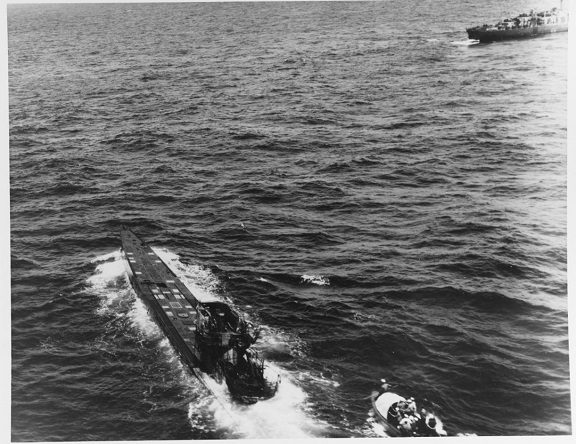
Boat from USS PILLSBURY approaches U-505. Courtesy of Naval History and Heritage Command
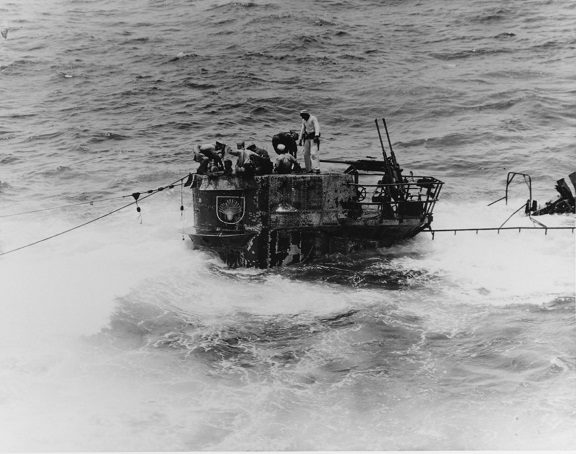
Albert David is the man at the far left on the conning tower in a khaki uniform bent at the waist. Naval History and Heritage Command
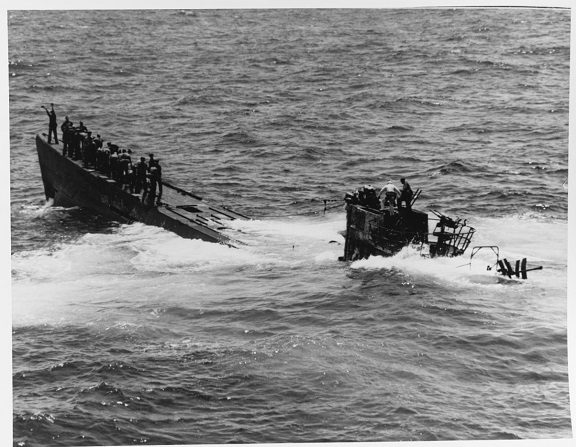
Salvage crew on the conning tower. Naval History and Heritage Command
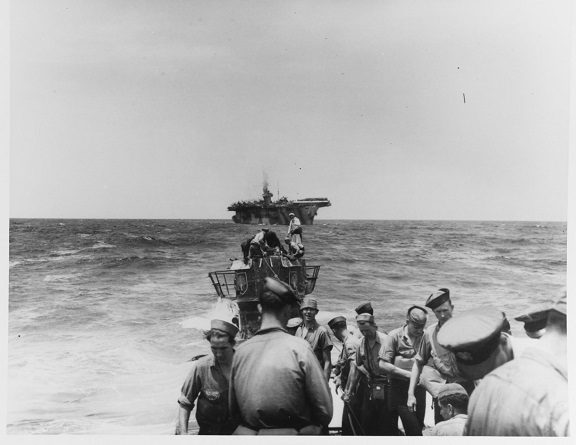
Albert David is man on conning tower at far left in khaki uniform with back to camera. Ship in background is escort carrier USS GUADALCANAL. Naval History and Heritage Command
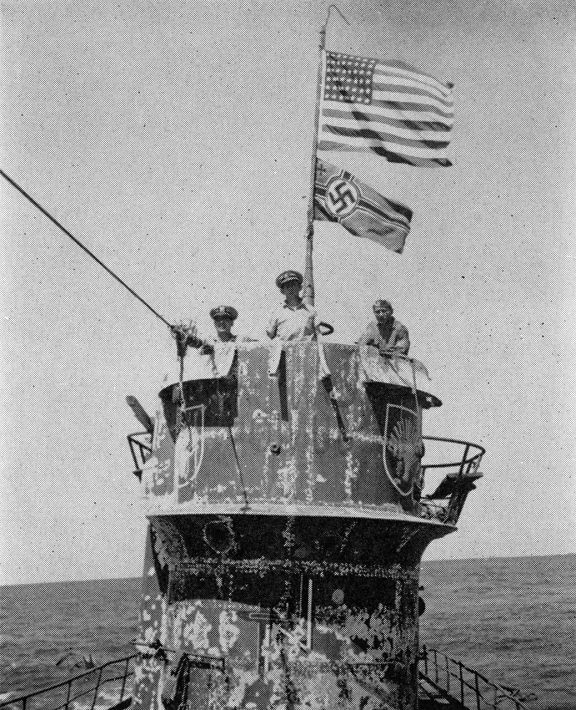
PHOTO AT TOP OF PAGE: Albert David is at left on conning tower. Man in center on conning tower is Captain Gallery. Naval History and Heritage Command
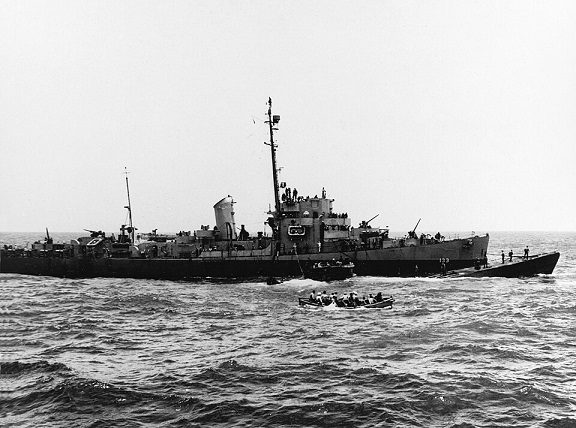
PILLSBURY. Naval History and Heritage Command
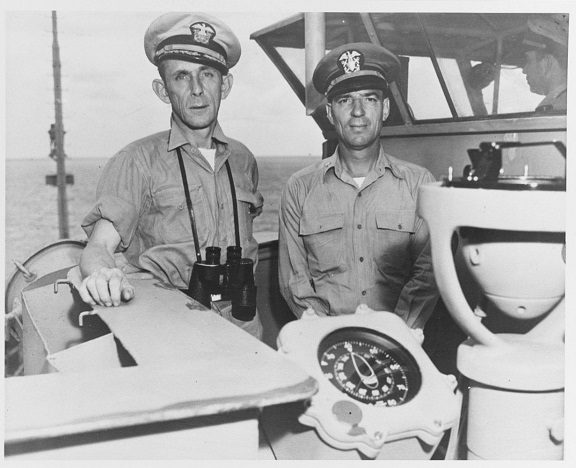
Albert David is man on right. Gallery is man on left. Naval History and Heritage Command
For this action, David was promoted to full Lieutenant and awarded the Medal of Honor, which he did not live to receive. He died of a heart attack at Norfolk, Virginia, on September 17, 1945, at the age of 43.
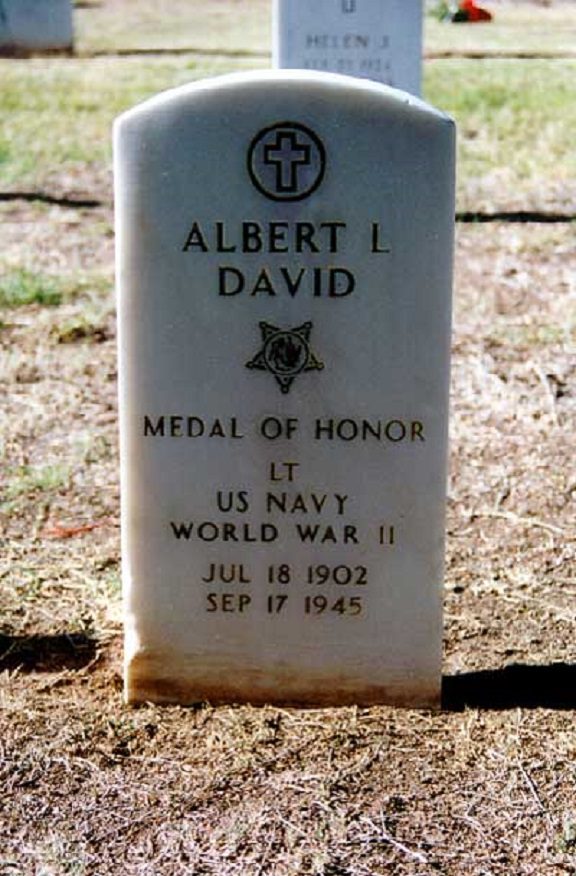
Grave of Albert David. Courtesy of Find a Grave
His widow received his Medal of Honor at the White House from President Harry Truman, who frequently visited Marysville. His Medal of Honor was the only one given to a Navy man in the Atlantic theater during World War II. The medal is on display in Chicago next to the U-505 at the Griffith Museum of Science and Industry in Chicago. Captain Gallery was responsible for saving the U-505 from scrapping after the end of the war and moving it to Chicago.
It should be noted that there is another German U-Boat in the State of Illinois, which I described in a previous article: https://wmhs.org/a-great-lakes-shipwreck-that-sank-a-german-u-boat-in-lake-michigan/
This Veterans Day, remember Albert Leroy David and all the others like him who served and gave their lives for us.
——————————–
James Heinz is the Wisconsin Marine Historical Society’s acquisitions director. He became interested in maritime history as a kid watching Jacques Cousteau’s adventures on TV. He was a Great Lakes wreck diver until three episodes of the bends forced him to retire from diving. He was a University of Wisconsin – Milwaukee police officer for thirty years. He regularly flies either a Cessna 152 or 172.
